
Active project / Concept
Mindplay Puzzle
Autism support should begin with a direct way for the child to be understood.
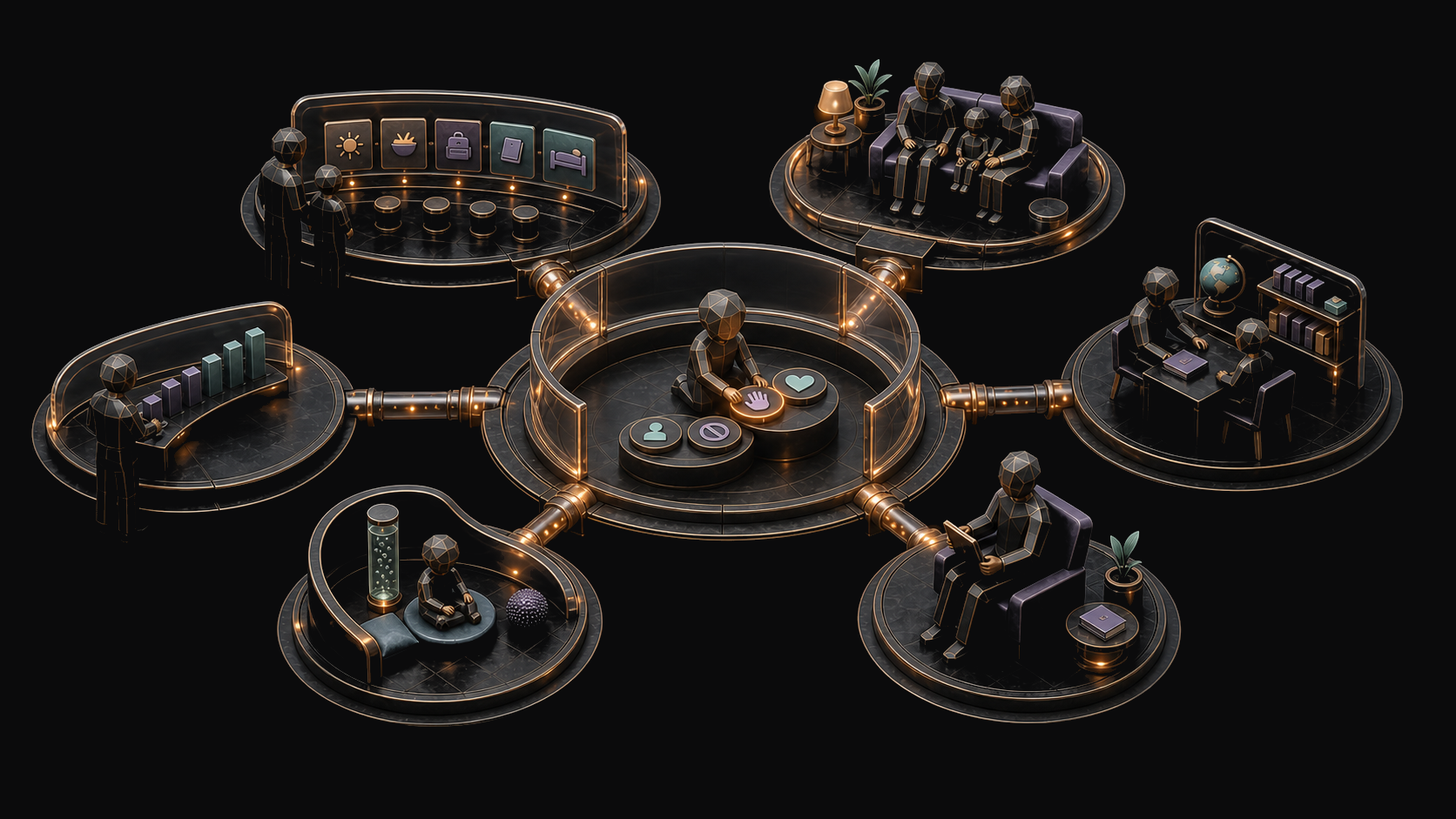
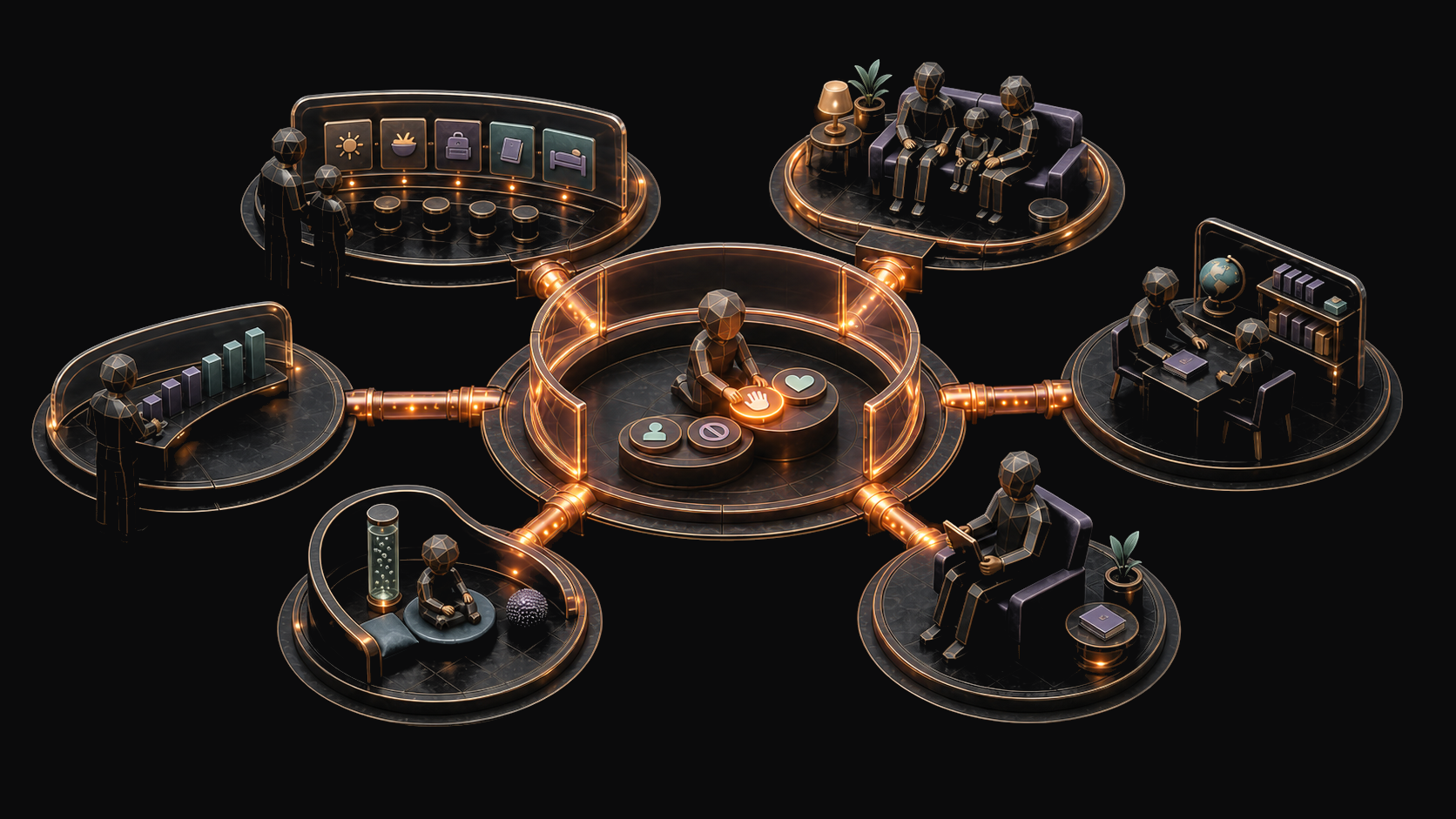
Mindplay Puzzle is a child-centred digital support product designed for children on the autism spectrum. It begins with visual communication, structured routines and activities for the child, then connects that experience with context from families and specialists.
Autism support is coordinated by adults. The child’s own signal can still be lost.
Children on the autism spectrum may communicate needs, choices, discomfort and emotions in different ways. Parents, special educators, therapists and institutions each hold part of the child’s daily context, but their observations and recommendations often sit in separate places. A product built only around adult administration would record information about the child without giving the child a direct role in the system.
The intended loop begins with expression, not administration.
The first product scope begins with visual communication designed for children on the autism spectrum, supported by structured routines and activities. A child can use images, symbols and simple choices to express a need, feeling, preference or refusal. Parents and specialists add context around that interaction and record changes they can review together.
Mindplay Puzzle is the first product supported by an underlying reusable platform. That foundation may later be adapted to other products and use cases, but its reuse remains a design intention until it has been demonstrated.
Participants
A coordinated autism-support environment where child expression, daily routines and responsible adult context meet.
System outcomes
Connected modules
- 01Visual communication
Images, symbols, emotions, needs and choices
- 02Daily activities
Routines, tasks and familiar sequences
- 03Support coordination
Parent and specialist observations in one context
- 04Progress record
Reactions, frequency and changes over time
- 01Express
The child selects a need, emotion or choice.
- 02Contextualize
A parent or specialist adds situational context.
- 03Support
An adult responds within the existing support process.
- 04Record
The reaction, activity and outcome are documented.
- 05Adjust
The support network refines the next routine or prompt.
Feedback loopRepeated signals may build shared context. This remains a product hypothesis until the child-facing flow is tested.
The next artifact is one communication set, not a full platform.
The concept does not yet have product screens that can support a claim of working software. The next useful artifact is smaller: a testable visual communication set for children on the autism spectrum, with enough context for parents and specialists to interpret the interaction without turning it into a diagnostic conclusion.
- 01 / ExpressChild visual communicationChildren on the autism spectrum
Images and simple choices make basic messages easier to show.
- 02 / OrganizeDaily activitiesChildren and parents
Routines and tasks gain a predictable visual structure.
- 03 / CoordinateParent-specialist communicationFamilies and professionals
Comments and observations stay connected to the same child context.
- 04 / ReviewProgress trackingParents and specialists
Reactions, activities and changes can be reviewed over time.
First prototype scope
Next artifactChild communication card set
This artifact is specified but not yet published as product evidence.
- Needs, emotions, choices and refusals
- Consistent images and simple symbols
- Parent and specialist context for each interaction
- Accessibility and safeguarding review before testing
- 01
Starting belief
Better adult coordination would improve support.
The original autism-support direction centred activities, parent-specialist communication and progress records.
Initial project brief - 02
Research signal
The child needs to be an active user.
An internal roundtable between special educators and developers identified direct communication for children on the autism spectrum as the missing product layer.
Internal specialist and developer roundtable - 03
Scope decision
The MVP now has four connected flows.
Child communication, daily activities, adult coordination and progress tracking form the intended scope. Needs, emotions and choices come first.
Mindplay Puzzle product signals - 04
Next evidence
Build the first cards and communication scenarios.
The concept advances when children, families and special educators can test a concrete child-facing flow.
Documented next step
The child uses the product. The adults gain shared context around that use.
Children on the autism spectrum
- A simpler way to express immediate needs and choices
- More active participation in everyday support
- Familiar visual structures for routines and activities
Families and specialists
- Less reliance on disconnected notes and messages
- Shared context around the same child-facing signals
- A clearer record for professional discussion
Schools and support centers
- A repeatable coordination model
- More consistent communication across participants
- A defined setting for a controlled pilot
The project has a market estimate, a revenue model and a stated funding path.
The commercial model is more developed than the product evidence. Intended revenue routes and a crowdfunding range have been defined, while willingness to pay, institutional procurement and operating costs still need validation.
- 7,000 to 9,000Estimated children on the autism spectrum in Serbia
- Registry of Children with Developmental Disabilities and the 2021 WHO estimate
- From the start of reporting in mid-2022 to 10 April 2025, the registry recorded 2,218 children diagnosed with autism. Because the total number for Serbia is not known, the estimate uses the WHO figure of one in 127 people.
- EUR 72,000Planned crowdfunding target
- Mindplay Puzzle funding signal
- The proposed range is assigned to MVP development and initial market validation.
- 3 routesPlanned revenue structure
- Mindplay Puzzle business-model signal
- Free access, parent premium features and institutional licences address different users and buyers.
- All profitPlanned social-impact allocation
- Mindplay Puzzle social-impact signal
- The stated model directs profit toward support for parents and children, initially day centers and extended care.
- Access model
- Free basic version
The free layer is intended to keep the core product accessible.
defined - Parent revenue
- Premium child-facing features
Parents’ willingness to pay for these features is the next stated commercial test.
planned - Institutional revenue
- B2B licences for schools, centers and specialists
The buyer, licence structure and procurement path still require field validation.
planned - Funding path
- EUR 72,000 crowdfunding target
The current plan assigns this range to MVP development and initial market validation.
planned - Profit allocation
- Support for parents and children
The published concept directs profit to concrete support, first through day centers and extended care. Governance and operating details remain to be formalized.
open
The concept advances only when the child-facing flow is understandable and safe.
Validation gate
A child can use the first flow with appropriate support.
Gate not yet passedWhat must be true
- to agreeComprehension
Children in the agreed test setting can understand and use the basic visual choices with appropriate support.
- to agreeShared interpretation
Parents and special educators can interpret the recorded signal and context consistently.
- definedProduct boundary
The flow makes no diagnosis, therapy or medical claim and does not replace professional judgment.
- openResponsible testing
Consent, privacy, accessibility and safeguarding requirements are agreed before a pilot.
SKWD can turn the decision trail into a prototype. The setting must come from the right partners.
SKWD carries in
- The product direction from the specialist and developer roundtable
- The four-flow MVP scope and decision trail
- Product and system design for a testable first interaction
This venture adds
- A child-facing visual communication layer
- Shared context for families and specialists
- A progress record with a clear non-diagnostic boundary
External proof needed
- Children, families and special educators for responsible testing
- A school, center or support institution
- Privacy, accessibility and safeguarding review
Next step
Build the first child-facing autism-support test in the right setting.
Bring specialist judgment, a controlled support environment or aligned early funding. We will agree the visual communication set, consent and safeguarding boundaries, and the validation gate before product claims expand.
Mindplay Puzzle is an active concept for children on the autism spectrum. It is intended to support communication and coordination; it does not provide diagnosis, therapy or medical advice. Product scope and commercial assumptions may change through specialist, family and institutional review.