
Active project / Concept
Trauma Safe
Some professional decisions must be practised before they become real, but never on a child.
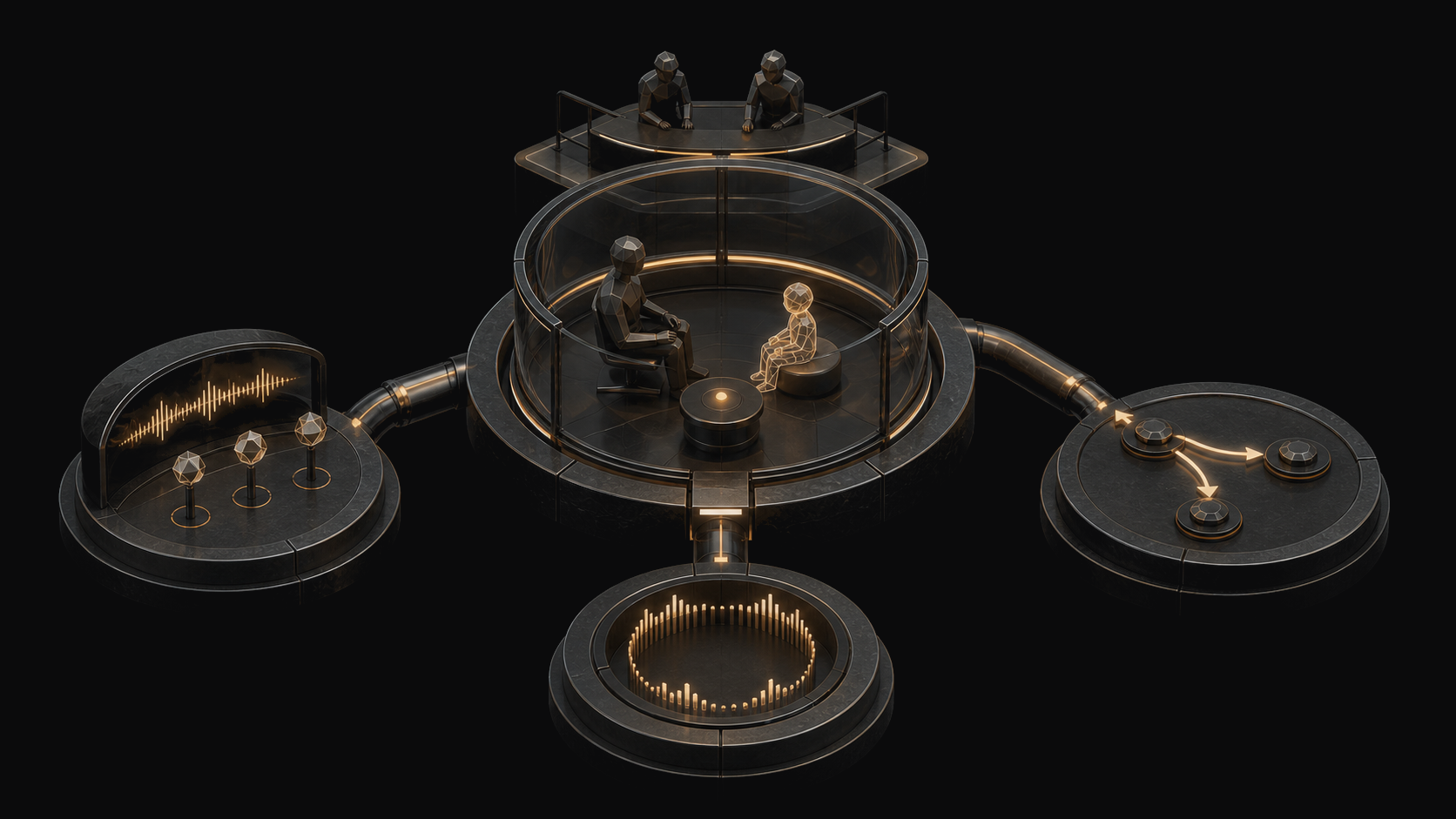
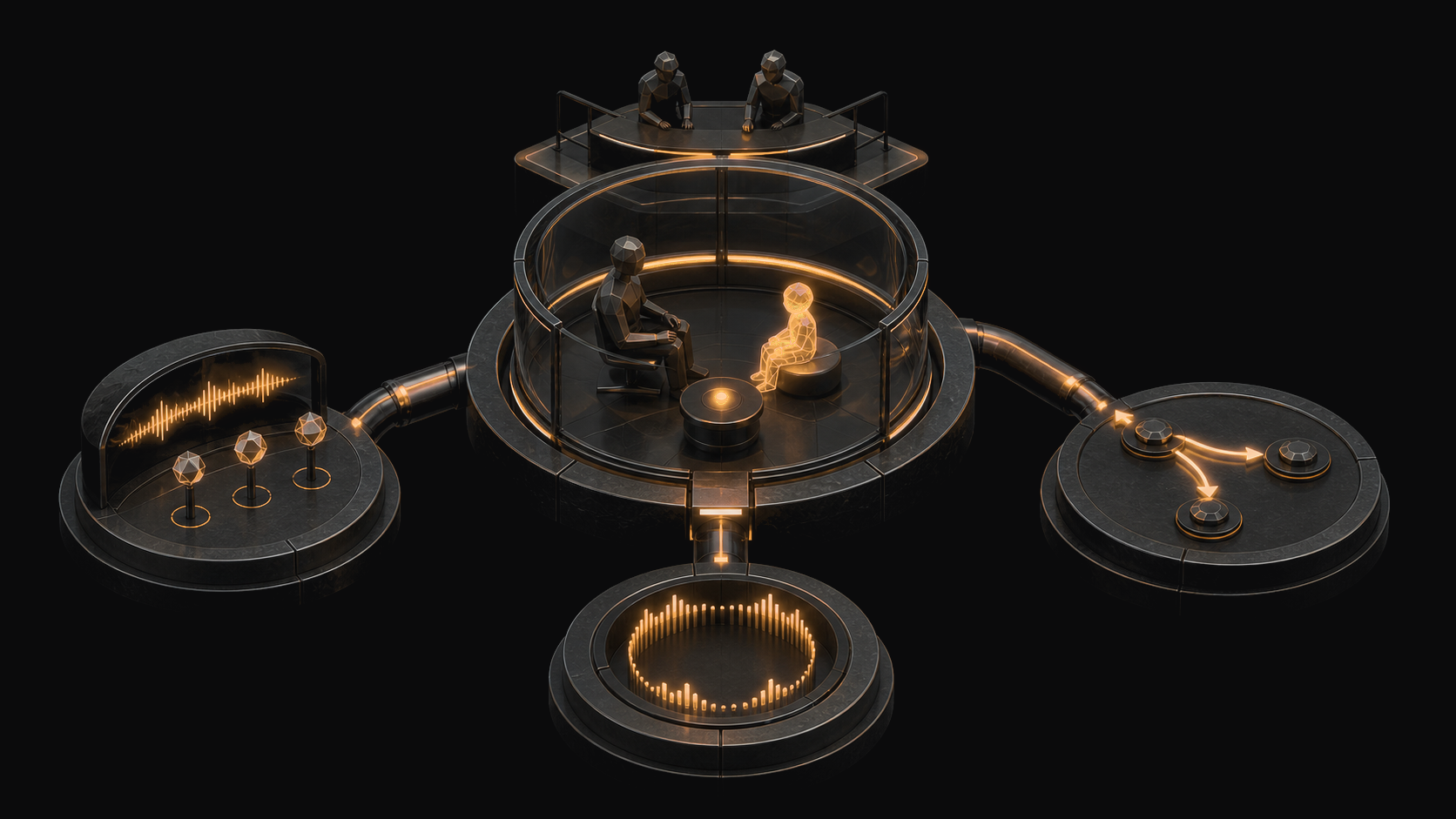
Trauma Safe is being defined as a simulation-based training product for professionals working in sensitive trauma-related settings. Controlled scenarios, guided feedback and institutional review create the learning model; subject experts and a responsible institution must define its boundaries.
Theory explains the standard. It cannot rehearse the hardest decision.
Professionals can learn principles through lectures, workshops and static materials. Those formats offer limited room to practice judgment, communication and consequence in sensitive situations. The real setting cannot become the rehearsal space, and children cannot become training material.
The product places a controlled simulation layer between theory and field work.
Trauma Safe places a professional inside a structured digital scenario with a defined objective, available choices and educational boundaries. AI-assisted dialogue may support interaction inside those boundaries. Trainers and institutions remain responsible for curriculum, assessment, supervision and safeguarding.
Participants
A web-based learning environment for controlled scenario practice, feedback and competency review.
System outcomes
Connected modules
- 01Scenario library
Structured situations based on professional practice
- 02Guided dialogue
Controlled AI-assisted interaction within defined scenarios
- 03Adaptive path
Module sequencing based on progress and competency level
- 04Competency record
Completion, decisions and feedback for review
- 01Assign
The institution assigns a scenario and learning objective.
- 02Encounter
The learner enters a realistic but controlled situation.
- 03Decide
The learner chooses how to respond inside the scenario.
- 04Review
Guided feedback explains the educational consequence.
- 05Adapt
The result informs the next module or trainer intervention.
Feedback loopScenario results may support training decisions. They do not replace professional supervision or qualification.
The first useful artifact is one governed scenario, not a complete training catalogue.
The local material defines the platform architecture and a planned implementation cycle. It does not document a working simulation or learner test. The next artifact should make one scenario, its feedback model and its institutional controls concrete enough to review.
- 01 / PrepareScenario structureTrainers and subject experts
One sensitive situation gains a defined objective, choices and educational boundaries.
- 02 / PracticeGuided interactionProfessional learners
A learner can move through the situation without using a real child as training material.
- 03 / ExplainEducational feedbackLearners and trainers
The consequence of each decision returns to an agreed learning frame.
- 04 / ReviewCompetency recordTraining institutions
Completion and feedback can be reviewed in one institutional context.
First prototype scope
Next artifactControlled scenario specification
The artifact is specified but is not yet documented as working product evidence.
- One institutional learning objective and realistic situation
- Defined choices, dialogue boundaries and educational consequences
- A trainer-facing feedback and review rubric
- Safeguarding, supervision and AI-use review before learner testing
- 01
Starting belief
Digital simulation can add practice where theory stops.
The product thesis is that structured scenarios can create room for difficult decisions without exposing children to training risk.
Final Trauma Safe project source - 02
Documented frame
The architecture joins scenarios, feedback, adaptation and competency review.
The intended system is defined, but no working module or measured learning result is yet evidenced.
Final project landing-page specification - 03
Product boundary
Institutions and experts must own the scenario standard.
AI-assisted dialogue stays inside predefined educational boundaries. Curriculum, assessment and supervision remain human responsibilities.
Defined product architecture - 04
Next evidence
Build and review one scenario with an accountable institution.
The concept advances when a curriculum owner and subject expert can review the interaction, feedback and safeguard model as one artifact.
Current implementation direction
Safe practice creates a different value for learners, trainers and public systems.
Professional learners
- More room to practice difficult decisions before field application
- Feedback inside a defined educational context
- A visible path through assigned competencies
Trainers and institutions
- Consistent scenarios across cohorts and locations
- Reusable modules alongside facilitated learning
- One record of completion, decisions and feedback
Public systems
- A potential route to broader training access
- Less dependence on one-off workshop delivery
- A controlled layer between theory and field work
The institutional need is described. Procurement, price and training impact remain open.
Trauma Safe is intended for social protection, mental health, education and public-sector institutions. It has a web-based delivery model and a planned institutional pilot, but no market size, pricing structure, procurement route, revenue claim or validated cost comparison is currently presented.
- DefinedPlatform architecture
- Final Trauma Safe project source
- The scenario, learning and review layers have a documented product frame.
- 9 monthsPlanned MVP implementation cycle
- Final Trauma Safe project source
- This is a planning assumption, not a delivery commitment or evidence of completed work.
- InstitutionalPlanned validation setting
- Final Trauma Safe project source
- A real curriculum owner and learner cohort are required to test the model.
- No field dataCurrent evidence constraint
- Local website materials
- Usability, competency change, delivery cost and institutional fit remain unproved.
- Primary buyers
- Training institutions and public systems
Social protection, mental health, education, law-enforcement and judiciary training bodies are named as target institutions.
defined - Delivery model
- Web-based institutional training
Reusable digital access across institutional environments is defined; the commercial licence structure still needs validation.
defined - Revenue model
- Not specified in current materials
Subscription, licence, implementation and content-production responsibilities still need commercial definition.
open - Pricing and economics
- No validated cost comparison
The model may reduce dependence on in-person training, but price, procurement cycle and cost outcomes are not yet tested.
open - Funding path
- Pre-seed build and controlled validation
Early funding is intended to support implementation and the first institutional evidence cycle.
planned
The concept advances when one scenario is useful, reviewable and safe.
Validation gate
One institution can run a controlled learning scenario under its own standard.
Gate not yet passedWhat must be true
- to agreeScenario validity
Subject-matter experts agree that the situation, choices and feedback represent the intended professional context.
- to agreeLearner usability
A defined learner cohort can complete and understand the scenario without facilitator repair of the product flow.
- openAssessment integrity
The institution agrees what the recorded decisions can and cannot say about competency.
- openResponsible use
AI boundaries, privacy, safeguarding, accessibility and human supervision are approved before testing.
SKWD can build the simulation system. The institution must own the learning standard.
SKWD carries in
- The documented scenario, dialogue, adaptation and competency architecture
- Product and engineering capability for a web-based learning system
- An evidence-led boundary between product artifact and training outcome
This venture adds
- One controlled digital scenario and learner flow
- Trainer feedback, review and competency-record controls
- The implementation frame for later institutional modules
External proof needed
- An institution with a real training standard and accountable owner
- Subject-matter experts who can define scenarios and feedback
- A learner cohort plus privacy, accessibility and safeguarding review
Next step
Define one governed scenario before planning a pilot.
Bring a training standard, subject-matter owner and controlled learner context. We will agree the first artifact and validation gate before implementation or outcome claims expand.
Trauma Safe is a concept in development. It does not replace professional qualification, supervision, clinical judgment or institutional safeguarding. The nine-month implementation cycle is a planning assumption and may change during scoping.