
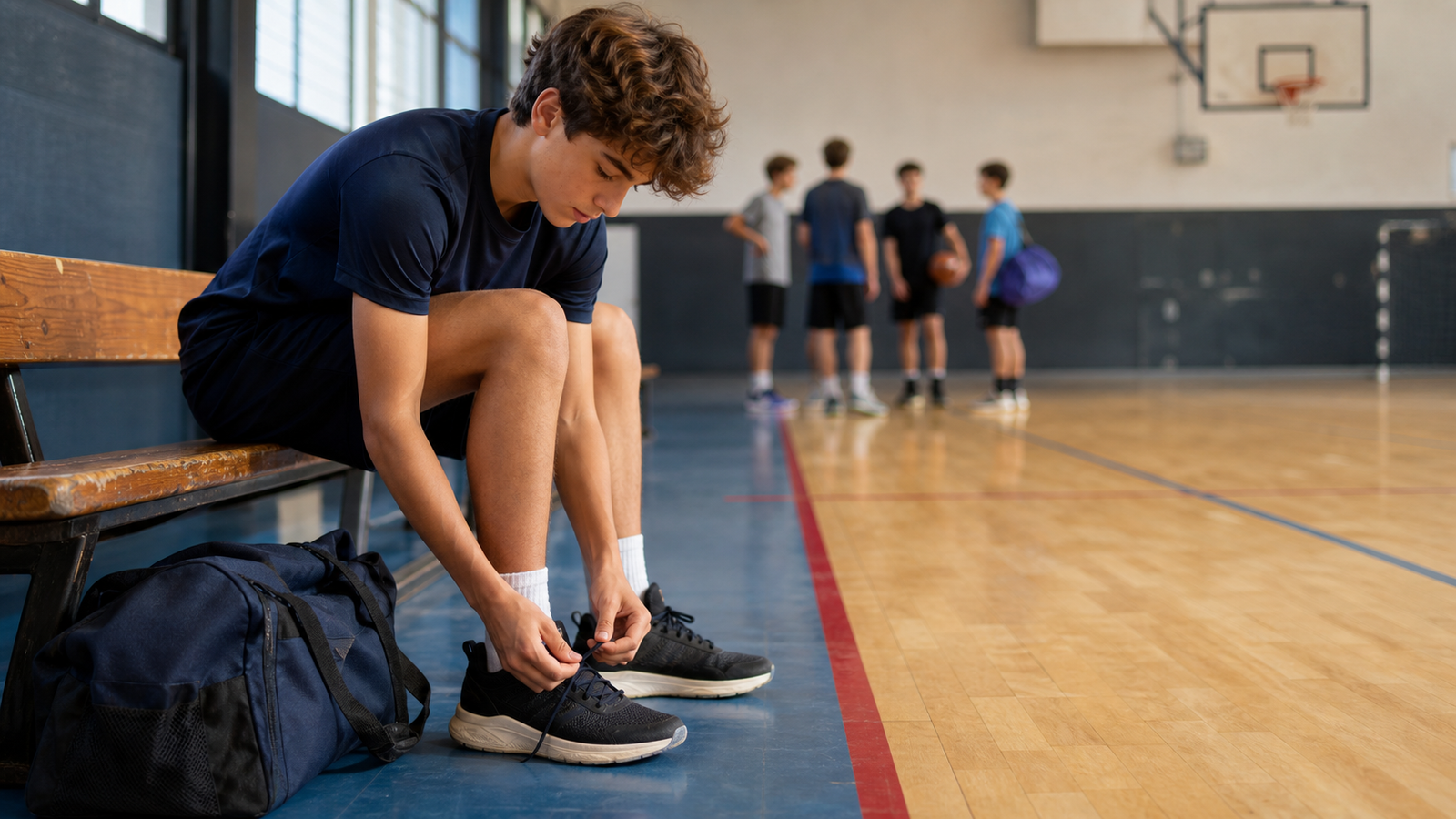
Participation can rise while the question of long-term retention remains unresolved. If we want young people to stay in sport, we may need to stop treating dropout simply as a failure of individual motivation.
Research points to a broader picture. Enjoyment, the relationship with the coach, belonging, autonomy, competence, social support and adequate recovery can all be part of the same story.
High participation does not mean retention is solved
The National Federation of State High School Associations reported a record 8,266,244 high-school sports participations in 2024–25, an increase of 203,942 over the previous year. It shows the scale of the school-sports system. [1]
But entering sport and wanting to remain in sport are different questions.
A systematic review and meta-analysis of youth soccer covered 12 studies and 724,036 young people aged 10–18. It calculated a weighted average annual dropout rate of 23.9%, with 26.8% for girls and 21.4% for boys. [2]
That figure is specific to youth soccer and should not be presented as a universal dropout rate for every sport.
What it does demonstrate is the size of the retention challenge.
It is not enough to ask how we get young people into sport. We also need to ask what kind of experience they have once they arrive.
Enjoyment is not a soft metric
Discussions about athlete retention often move quickly toward discipline, talent and performance.
The evidence suggests that the picture is more complex.
A systematic review and meta-analysis published in Frontiers in Psychology found that sport enjoyment was strongly associated with young athletes’ intention to continue, with a meta-analytic correlation of r = 0.45. Coach, parent and peer support, satisfaction of basic psychological needs and perceived sport competence were also among the factors associated with persistence. [3]
That means “Is the athlete improving?” is not the only useful question.
Do they still want to come to the next practice?
Do they feel that they are becoming more competent?
Do they feel part of the team?
Do they have meaningful autonomy?
And does the relationship with the coach support development rather than only demand results?
Coaches influence more than performance
Another systematic review and meta-analysis included 6,304 adolescent team-sport athletes. Motivation-related constructs and the athlete’s experience of sport showed some of the strongest relationships with dropout, leading the authors to emphasize the importance of creating a high-quality motivational climate that supports both motivation and enjoyment. [4]
A large prospective Danish study followed 7,110 young people aged 12–20 across basketball, handball, football, badminton and gymnastics. Intrinsic motivation, competence, relatedness, autonomy and an empowering coach-created climate were associated with continuing in sport. Controlled motivation, frustration of psychological needs and a disempowering coaching climate were associated with dropout. [5]
That changes how we should think about a sports system.
A coach does more than design training.
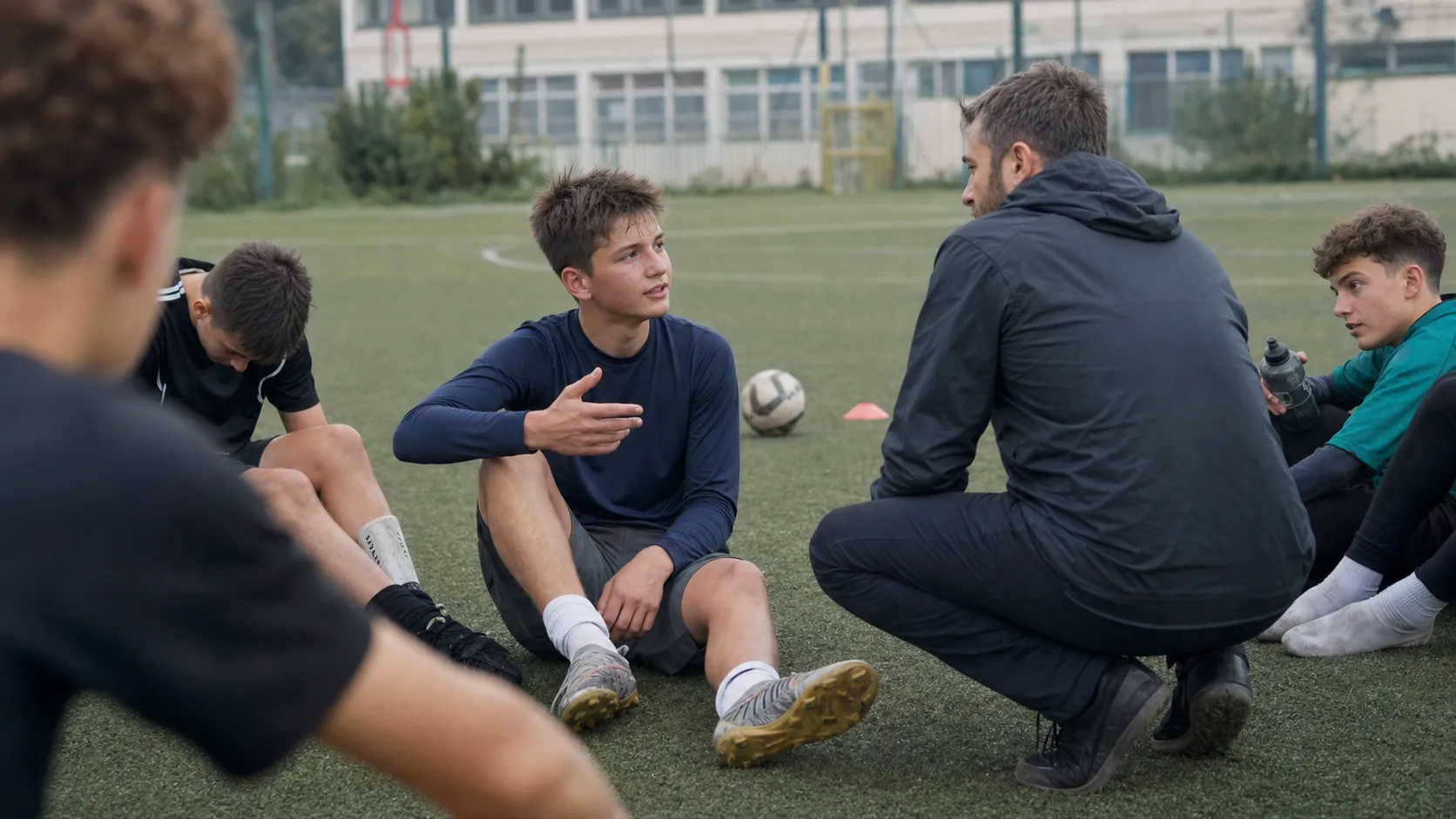
The way feedback is given, mistakes are handled, responsibility is shared and young athletes are involved in the process becomes part of the environment that may encourage them to continue — or contribute to their decision to leave.
Sometimes the problem is too much sport
There is another part of the retention problem that is easy to miss.
More training is not automatically better.
In its 2024 clinical report, the American Academy of Pediatrics identifies burnout as an important reason for youth-sport attrition and recommends that young athletes have at least one to two days per week away from competition and sport-specific training, as well as two to three months each year away from any one specific sport, allowing physical and psychological recovery. [6]
That is not an argument against serious training.
It is an argument against environments in which fatigue, declining enjoyment, pressure or withdrawal become visible only after an athlete says they no longer want to play.
Prevention should not start with predicting who will quit
Digital technology can easily move in the wrong direction.
We could try to create another score that says: “This athlete has a 72% probability of dropping out.”
That is not the direction we want for MindPlay Sport.
Dropout is complex. A young person may change clubs, change sports, take a break or leave organized sport completely. Reasons can be sporting, social, family-related, financial, developmental or health-related.
An algorithm does not know the whole life of a child.
A more useful question is what an institution can understand before complete disengagement occurs.
Is communication becoming more negative? Is the athlete withdrawing from activities? Is pressure increasing? Does the coach have enough context? Can the athlete express how they experience their sporting environment? Is mental-performance work integrated into everyday development, or isolated in occasional sessions?
That is a more reasonable role for technology.
What this means for MindPlay Sport
MindPlay Sport already brings school and team operations, communication, tasks and calendars, AI-assisted review of potential communication risk and mental-performance work into one institutional environment. Its safeguarding model is designed to support accountable human review rather than replace human responsibility.
There is, however, an important boundary.
We do not yet have evidence that MindPlay Sport reduces youth-sport dropout.
The MVP demonstrates the product model. A controlled school pilot still has to establish how it works in daily use, which signals are genuinely useful to coaches and institutions, and whether an integrated operating environment can help responsible people notice meaningful changes earlier.
For us, therefore, dropout research is less a marketing claim than a guide for product validation.
If enjoyment, autonomy, competence, belonging, coaching climate and adequate recovery are associated with long-term participation, a pilot should examine whether a digital system can help institutions understand that context more clearly — without reducing a young athlete to a score and without shifting responsibility from people to algorithms.
The goal is not to keep every child in the same team at any cost
This may be the most important distinction.
A successful retention system should not define success simply as preventing young people from leaving a particular club.
Sometimes changing clubs is the right decision. Sometimes another sport is a better fit. Sometimes a break is necessary.
The larger objective is different:
to preserve a healthy relationship with sport long enough for physical activity, belonging, challenge and development to remain part of a young person’s life.
Technology cannot replace a good coach, a parent, a specialist or an accountable institution.
But it may be able to help them see earlier what was previously scattered across practices, conversations, messages and assumptions.
That is the hypothesis MindPlay Sport now needs to test in the field.
References
[1] National Federation of State High School Associations. Participation in High School Sports Hits Record High with Sizable Increase in 2024–25. September 2025. Participation in High School Sports Hits Record High with Sizable Increase in 2024-25
[2] Møllerløkken NE, Lorås H, Pedersen AV. A Systematic Review and Meta-Analysis of Dropout Rates in Youth Soccer. Perceptual and Motor Skills. 2015;121(3):913–922. DOI: 10.2466/10.PMS.121c23x0.
[3] Zhang M, Wang X-C, Shao B. Predictors of Persistent Participation in Youth Sport: A Systematic Review and Meta-Analysis. Frontiers in Psychology. 2022;13:871936. DOI: 10.3389/fpsyg.2022.871936.
[4] Back J, Johnson U, Svedberg P, McCall A, Ivarsson A. Drop-out from team sport among adolescents: A systematic review and meta-analysis of prospective studies. Psychology of Sport and Exercise. 2022;61:102205. DOI: 10.1016/j.psychsport.2022.102205.
[5] Nielsen G, Wikman JM, Appleton PR, Bentsen P, Elsborg P. Predicting adolescents’ continuation in club sports: A prospective cohort study of the importance of personal and contextual motivational factors in five sports in Denmark. Scandinavian Journal of Medicine & Science in Sports. 2024;34(4):e14616. DOI: 10.1111/sms.14616.
[6] Brenner JS, Watson A; AAP Council on Sports Medicine and Fitness. Overuse Injuries, Overtraining, and Burnout in Young Athletes. Pediatrics. 2024;153(2):e2023065129. DOI: 10.1542/peds.2023-065129.