
Active project / Concept
Paw2Paw Connect
Responsible breeding and trusted discovery begin with a record people can verify.
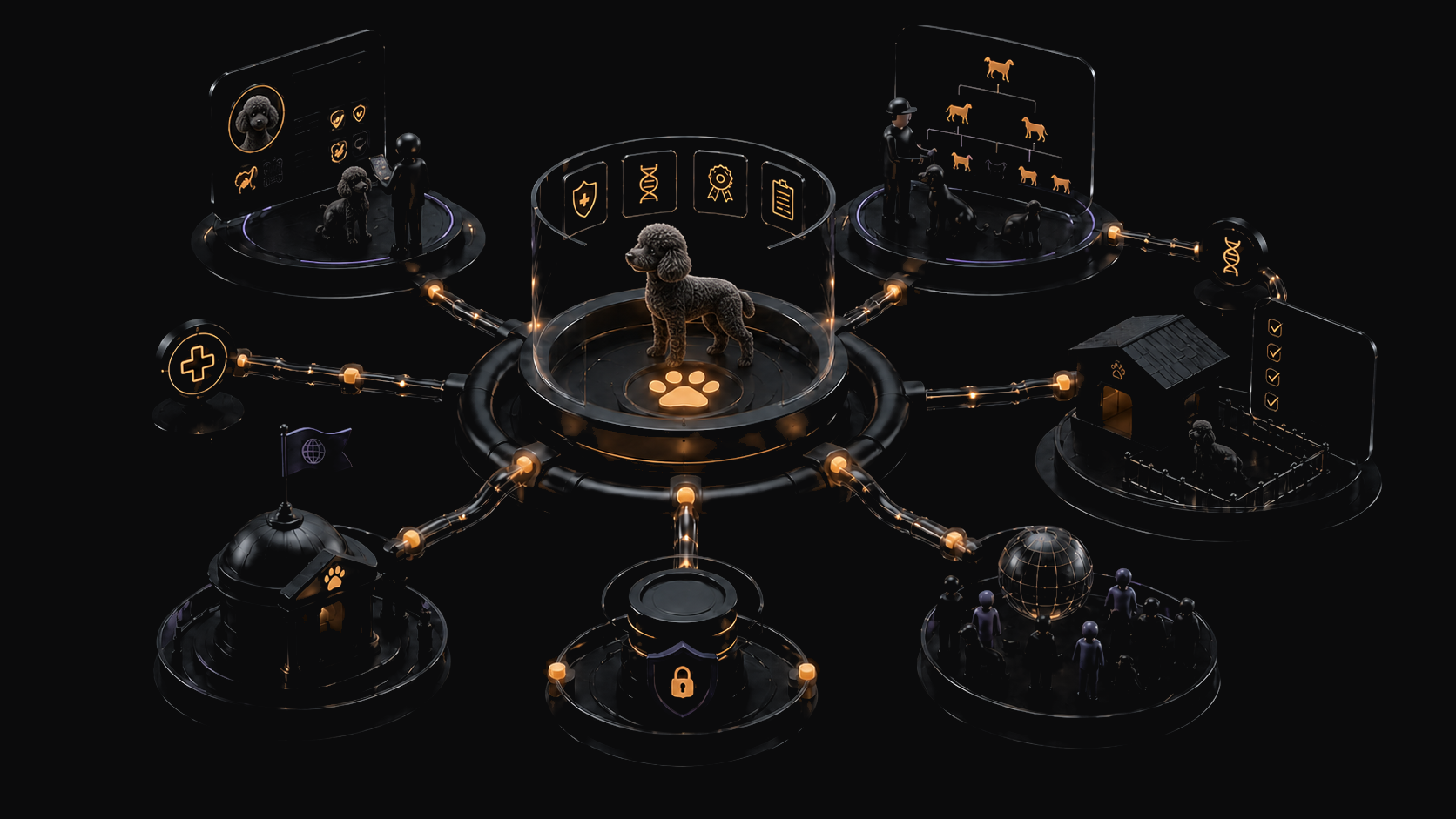
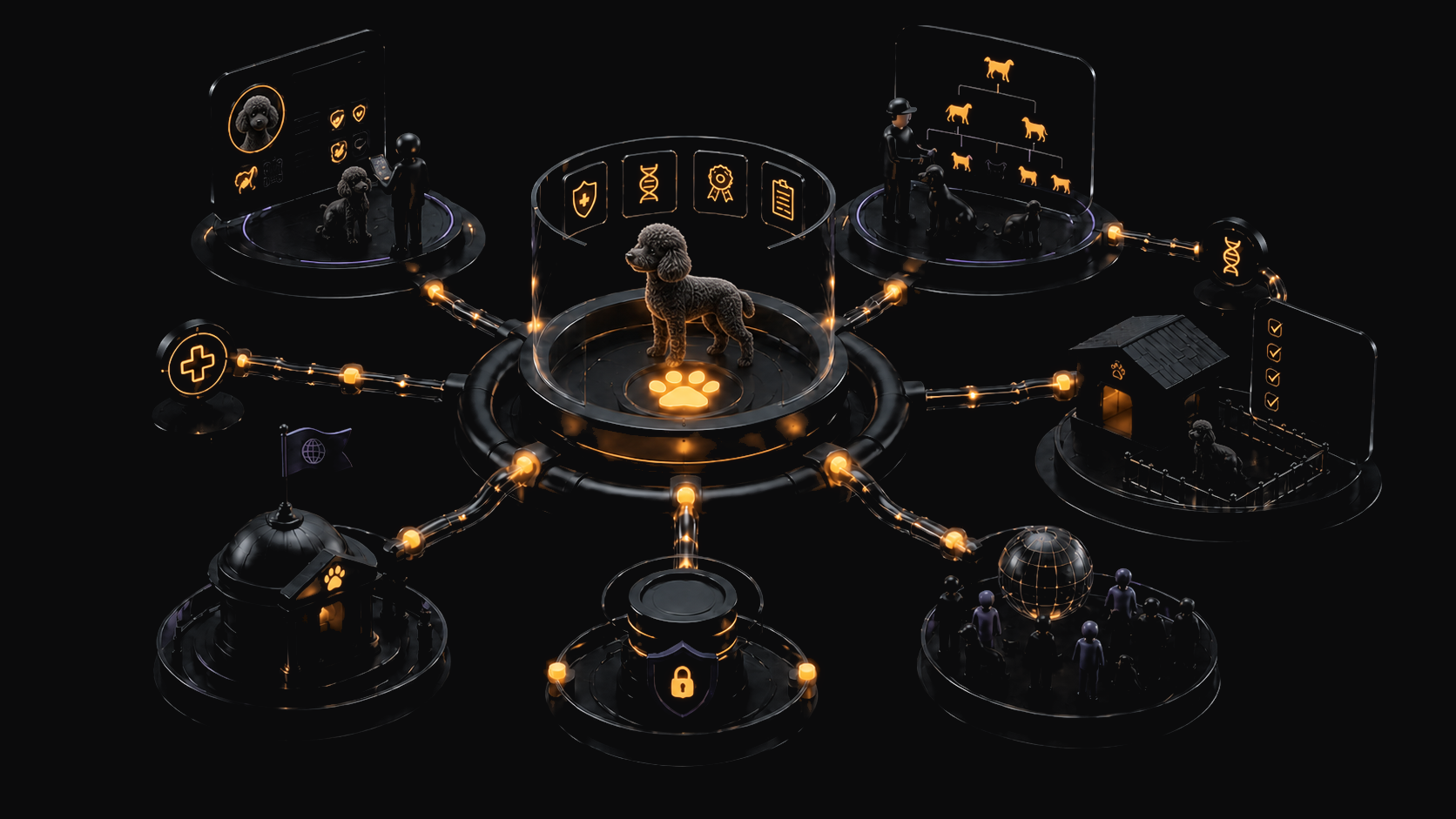
Paw2Paw Connect is being defined around persistent dog profiles, pedigree context, planned verification and local discovery. A breeder community and reviewable source records are needed to agree what the identity contains, who can verify it and where authority sits.
The dog ecosystem has discovery channels, but no shared trust record.
Owners, breeders and canine organizations coordinate through social groups, messaging apps, spreadsheets, paper pedigrees and separate records. Discovery is easy to begin and difficult to verify. The missing layer is not another generic listing. It is a consistent identity and relationship model.
The dog profile becomes the anchor for trust, discovery and coordination.
Paw2Paw Connect organizes the ecosystem around a persistent dog identity. Pedigree, ownership, media and relevant records connect to that profile. Planned verification links source documents and participant identity to the same context. Discovery and breeding workflows then operate on a maintained record rather than an isolated listing.
Participants
A digital identity and relationship layer for owners, breeders and canine organizations.
System outcomes
Connected modules
- 01Dog identity
Profile, ownership, media and relevant records
- 02Pedigree system
Genealogy across generations and bloodlines
- 03Verification
Planned checks for documents, breeders and ownership
- 04Geo-discovery
Nearby dogs, owners, communities and compatible matches
- 05Breeding workflow
Communication, coordination and litter tracking
- 01Create
Build the dog profile with identity and pedigree context.
- 02Verify
Review documents, participant identity and ownership rules.
- 03Discover
Find relevant dogs, breeders and nearby communities.
- 04Coordinate
Manage communication, matching and breeding activity.
- 05Maintain
Keep lineage, reputation and relationship history current.
Feedback loopEach accountable update is intended to strengthen the next discovery or breeding decision. That trust effect still requires field validation.
The build should prove one trustworthy profile before it tries to create a marketplace.
The current focus is mobile platform development, digital pedigree infrastructure, breeder onboarding and geo-based matching. A working core flow, official registry integration and verified breeder cohort are not yet evidenced. The first useful artifact is a profile whose claims, sources and permissions can be reviewed.
- 01 / CreateDigital dog identityOwners and breeders
Identity, ownership, media and relevant records share one profile.
- 02 / TracePedigree and genealogyBreeders and organizations
Bloodlines and family relationships gain a structured visual record.
- 03 / VerifyRecord provenanceBreeders and canine bodies
The artifact can show who supplied a record and what verification status it has.
- 04 / DiscoverGeo-based networkDog owners
Local discovery can use location, profile and community context.
- 05 / CoordinateBreeding workflowOwners and breeders
Matching, communication and later records return to the same identity.
Current build target
Next artifactVerified dog profile flow
The artifact is the next evidence target; current materials do not document it as a working MVP.
- Dog identity, ownership and pedigree source fields
- Participant roles and a visible verification status
- One discovery or breeding coordination path
- Consent, record authority and health-information boundaries
- 01
Starting belief
A pet network needs more than listings and social profiles.
The product thesis is that discovery and coordination become more useful when they return to a maintained dog identity.
Final Paw2Paw project source - 02
Product signal
Identity, pedigree and verification are the central infrastructure.
These records take priority over marketplace breadth, with a selected regional breeder network as the first scope.
Concept to MVP plan - 03
Scope decision
The first network should be narrow enough to verify.
Selected breeds and participants can expose record, role and trust problems before geographic or marketplace expansion.
Initial validation direction - 04
Next evidence
Run the profile flow with real records and defined authority.
The concept advances when a selected breeder cohort can create, review and maintain profiles under agreed verification rules.
Required MVP evidence
A shared identity changes what owners, breeders and organizations can trust.
Dog owners
- More context when discovering breeders or other dogs
- Pedigree and ownership information in one profile
- Local discovery tied to dog identity
Breeders
- A persistent professional and reputation context
- Pedigree and breeding activity in one workflow
- Direct relationships with network participants
Canine organizations
- A path toward more consistent digital records
- Shared infrastructure for member organizations
- Defined authority over verification rules where agreed
The first region and participant groups are named. Network demand and economics are not.
The first network is focused on the Balkans, with Central Europe as a later adjacent region and selected breeds as the initial validation scope. Intended participants include owners, breeders, kennels and canine organizations. A sourced market size, selected buyer, revenue model, price, registry agreement and live network activity are not yet established.
- BalkansInitial regional focus
- Final Paw2Paw project source
- The first network is intended to remain geographically focused.
- Central EuropePlanned adjacent region
- Final Paw2Paw project source
- Expansion is a later hypothesis, not current coverage.
- Selected breedsPlanned validation scope
- Concept to MVP plan
- A narrower network can test record and verification quality before broader discovery.
- No verified cohortCurrent evidence constraint
- Local website materials
- Trust, record maintenance, network activity and willingness to pay remain unvalidated.
- Primary users
- Owners, breeders and canine organizations
The participant groups and their intended workflows are defined.
defined - Initial operating model
- Focused regional network
Selected breeds and breeder communities are intended to form the first controlled network.
planned - Revenue model
- Not specified in current materials
Consumer access, breeder tools, organizational licences, marketplace fees and service responsibilities remain open choices.
open - Verification governance
- Requires authoritative partners
The platform cannot define official pedigree, ownership or health-record authority on its own.
open - Funding path
- Pre-seed mobile build and network validation
Early funding is intended to support the core profile flow and focused regional evidence cycle.
planned
The next release is a trusted record used by a small network.
Validation gate
A selected breeder network can create, review and maintain trustworthy dog profiles.
Gate not yet passedWhat must be true
- to agreeProfile completeness
Participants can create a useful dog identity and pedigree record from the agreed source material.
- openVerification authority
The cohort agrees who may verify each record, what evidence is required and how uncertainty is shown.
- to agreeOngoing maintenance
Owners and breeders keep the relevant profile and relationship history current during the test.
- openResponsible data use
Consent, ownership, location, pedigree and health-related information follow agreed privacy and access rules.
SKWD can build the identity layer. The first network must define what counts as trusted.
SKWD carries in
- The dog identity, pedigree, discovery and coordination product model
- Social profile, discovery and communication platform capability
- An evidence boundary between a planned verification system and official authority
This venture adds
- The first dog profile, pedigree and provenance flow
- Participant roles, verification states and controlled discovery
- The operating model for a selected breeder network
External proof needed
- Breeders, kennels and canine organizations with real records
- Pedigree, ownership and identity expertise
- Privacy, consent and health-information boundaries for the first cohort
Next step
Define the first trusted network before building its profile.
Bring a selected breeder community, pedigree expertise or identity authority. We will agree the record types, verification roles and first profile artifact before marketplace or scale claims expand.
Paw2Paw Connect is an active concept in definition. It is not presented as an official canine registry or veterinary record system. Pedigree, ownership, verification and health-related information require authoritative rules, consent and source validation.